
- Introduction
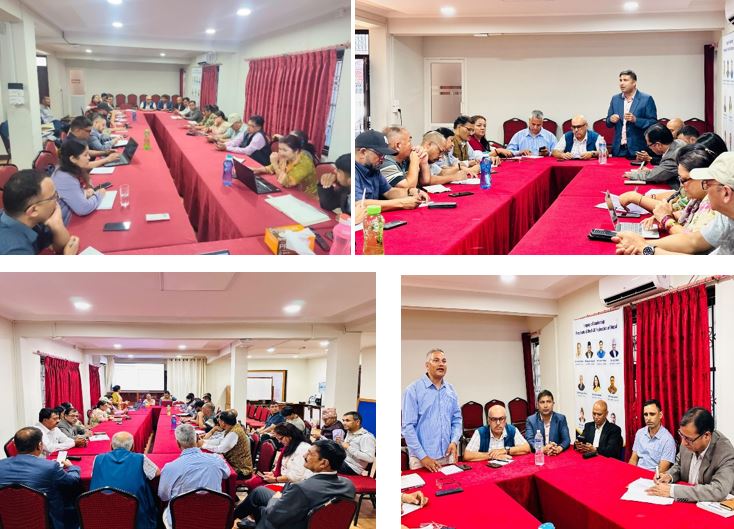
A Civil Society Dialogue on “Humanitarian Assistance, Quality, Accountability and the Role of Civil Society Organizations in the Rasuwa–Bhotekoshi Flood Response” was organized under the Non-Governmental Organization Group of the National Platform for Disaster Risk Reduction (NPDRR), with the involvement of DiMaNN and the NGO Federation of Nepal. The programme was held at the NGO Federation of Nepal Office, Buddhanagar, on 16 September 2026, with the purpose of bringing together civil society organizations, networks, federations and other actors engaged in disaster response to reflect on the ongoing humanitarian response and discuss ways to improve its effectiveness, quality and accountability. The dialogue created a common platform for participants to review rescue and relief efforts, identify gaps experienced during the response, and discuss the role of civil society organizations in relief, recovery, rehabilitation and reconstruction. Particular attention was given to the practical application of the Sphere Standards and Core Humanitarian Standard (CHS), as well as protection, safeguarding, humanitarian ethics, coordination, information-sharing and the dignity of disaster-affected people. The programme also aimed to strengthen cooperation between civil society organizations and government agencies and to encourage more coordinated and responsible humanitarian action.
The programme was chaired by Surya Bahadur Thapa, President of DiMaNN and the NGO Group. Arjun Bhattarai, President of the NGO Federation of Nepal, welcomed the participants and highlighted the objectives of the dialogue. Dr. Sunita Sharma, Advisor to DiMaNN, presented on the Sphere Standards and Core Humanitarian Standards (CHS), including their practical application and importance. Shyam Sundar Gyawali, Advisor to DiMaNN, further clarified the standards and shared observations on their application during relief distribution, the quality of assistance, the dignity of affected people and the role of civil society organizations. The dialogue brought together representatives from approximately 50 organizations, providing an opportunity to share field experiences, concerns and practical suggestions for improving humanitarian assistance in the flood-affected areas.
- Objectives
The main objectives of program were to:
- reflect on the rescue and relief efforts during the Rasuwa-Bhotekoshi flood;
- evaluate the gaps and weaknesses experienced during the disaster response and
- brainstorm the roles of civil society organizations and individuals in effective disaster management.
- Major Issues Discussed
The civil society dialogue provided a platform for participants to reflect on the humanitarian response to the Rasuwa–Bhotekoshi flood and to identify areas where response, coordination and recovery efforts could be strengthened. The discussions mainly focused on humanitarian standards, ethical practice, localization, coordination, information management, protection, inclusion, relief delivery and longer-term recovery. The following key issues emerged from the discussions:
- Application of Sphere Standards and Core Humanitarian Standard
A major area of discussion was the practical application of the Sphere Standards and Core Humanitarian Standard (CHS) in humanitarian response. Participants emphasized that these standards provide an important basis for maintaining the quality and accountability of assistance delivered to disaster-affected communities. Protection, safeguarding, humanitarian ethics and codes of conduct were discussed as closely related elements of quality humanitarian action. The discussion also raised the question of how consistently these standards are actually being applied at the field level. Participants noted that understanding humanitarian standards alone is not sufficient; organizations and humanitarian workers need to translate them into their day-to-day practices. The way relief is delivered, communities are approached and affected people are treated should reflect humanitarian principles and agreed standards. Participants further emphasized that the Sphere Standards and CHS should be contextualized and adapted to the Nepalese national context so that they can be more practical and relevant for organizations working at national and local levels. This requires regular training and orientation for humanitarian actors, along with continued monitoring to assess how effectively the standards are being applied in the field. A stronger monitoring mechanism was considered important for identifying gaps, encouraging compliance and improving humanitarian practices over time. Greater attention was therefore called for to strengthen the practical, contextualized and monitored application of these standards throughout disaster response, recovery, rehabilitation and reconstruction activities.
- Ethical Practice, Dignity and Behavior towards Affected People
The need to protect the dignity and self-respect of disaster-affected people was repeatedly emphasized. Participants discussed humanitarian assistance not simply as the provision of relief materials but also as a process that should respect people and their experiences during a difficult period. Behavior towards affected individuals was therefore considered an important part of the overall quality of humanitarian response. The discussions highlighted the importance of responsible behavior by organizations and personnel involved in humanitarian assistance. Ethical conduct, respectful communication and adherence to codes of conduct were considered necessary when interacting with affected communities. Participants stressed that the manner in which assistance is delivered can be as important as the assistance itself, particularly when people are already experiencing loss, uncertainty and disruption following a disaster.
- Localization and Contextualization of Humanitarian Standards
Participants discussed the need to localize and contextualize humanitarian standards so that they are practical and relevant to Nepal’s disaster-response context. There was a view that Sphere and other humanitarian standards should be presented in a simple and understandable manner that can be used effectively by organizations working at different levels. Localization was also linked to the wider role of local organizations and local actors. Participants emphasized that humanitarian response should recognize local realities, existing practices and community contexts. The discussion suggested that humanitarian standards should not remain only as externally developed frameworks but should be adapted in ways that support their practical use within Nepal. Continued discussion and orientation on these standards were also considered important for improving their understanding and implementation.
- Role and Coordination of Civil Society Organizations
The role of civil society organizations (CSOs) in disaster response, recovery, rehabilitation and reconstruction received considerable attention. Participants discussed how organizations could work together more effectively and contribute collectively to the recovery process. The need for stronger cooperation among CSOs and between civil society and government agencies was highlighted throughout the dialogue. Participants also discussed the importance of creating spaces for dialogue, counselling, policy engagement and monitoring. A more organized approach among CSOs was considered necessary to improve their contribution to disaster response. The possibility of developing a cluster-based coordination approach among civil society organizations, similar to existing coordination mechanisms, was raised as a means of strengthening collaboration and organizing response activities more systematically.
- Information Gaps, Data Sharing and Evidence
Another key concern was the presence of information gaps during disaster response. Participants noted that effective humanitarian action depends on timely and reliable information about affected communities, needs, activities and available support. Weak or incomplete information can make coordination more difficult and may affect the ability of organizations to respond appropriately. The discussion therefore emphasized the need to develop and maintain databases, evidence and information on CSO activities. Better sharing of information between civil society organizations and government agencies was also considered necessary. Participants suggested that proper data management could help organizations understand who is working where and what support is being provided. Documentation and evidence were also viewed as important for monitoring response activities and supporting future planning.
- Gaps in Relief Distribution
Participants raised concerns that relief materials had not adequately reached some affected areas in Rasuwa. This was identified as an important gap in the humanitarian response. The discussions highlighted the need for collective efforts to improve the delivery of relief and ensure that assistance reaches communities experiencing unmet needs. This concern also reinforced the importance of better coordination and information-sharing. Participants noted that knowing where assistance has already been provided and where gaps remain can help organizations respond more effectively. Relief distribution was therefore discussed not only as a logistical issue but also as an area requiring stronger coordination among the actors involved in the response.
- Protection and Safeguarding
Protection and safeguarding emerged as major concerns during the dialogue. Participants emphasized that humanitarian response should give adequate attention to the safety, dignity and protection of people affected by disaster. Protection should therefore be considered throughout relief and recovery activities rather than being treated as a separate issue. The discussion also highlighted the need for organizations to strengthen safeguarding practices within their programs. Humanitarian workers and organizations were encouraged to follow ethical standards and codes of conduct and to remain sensitive to the needs and circumstances of affected people. Protection was identified as particularly important when assistance is provided to people who may already be facing increased vulnerability following the disaster.
- Senior Citizens and Other Vulnerable Groups
The specific situation of senior citizens was raised during the discussion, with participants noting that they were among those significantly affected by the flood. This highlighted the need to ensure that humanitarian assistance takes into account the needs of people who may require additional support during response and recovery. Participants also discussed the broader importance of inclusive humanitarian action. Response programs should be attentive to different needs within affected communities rather than assuming that all people experience disasters in the same way. The discussion therefore emphasized greater sensitivity to vulnerable groups when planning and delivering relief and recovery assistance.
- Gender-Sensitive and Inclusive Response
The need for a gender-sensitive and inclusive approach was another important theme. Participants emphasized that inclusion should be integrated into humanitarian programs rather than considered only as an additional activity. This approach should be reflected throughout response and recovery planning. The discussion also referred specifically to the importance of incorporating GEDSI considerations in recovery programs. Participants stressed that recovery activities should be designed in ways that recognize the different circumstances and needs of affected groups. The need for relevant legal or policy-level modifications was also raised where existing provisions may require improvement to support a more inclusive response.
- Temporary Shelter
The provision of temporary shelter was identified as an important need for disaster-affected households. Participants discussed the need for stronger advocacy regarding the use of available relief funds to support temporary shelter arrangements. Temporary shelter was considered part of the transition from immediate relief towards recovery. The discussions suggested that affected families require appropriate support while longer-term rehabilitation and reconstruction processes are being planned. Participants therefore emphasized the importance of ensuring that temporary shelter receives sufficient attention within the response.
- Local Participation and Cultural Relevance
Participants emphasized the value of involving local staff and local actors in humanitarian response and recovery. Local participation was seen as important because people working within affected areas are more closely connected to the local context and communities. The discussion also emphasized that interventions should be culturally relevant. Humanitarian activities should consider local practices and community realities when designing and delivering assistance. Greater participation of local actors was therefore viewed as a way to make response activities more appropriate and better connected to the needs of disaster-affected communities.
- Livelihood Recovery and Support to Families of Missing Persons
Participants observed that livelihood concerns had not received sufficient attention in the ongoing response. While immediate relief remains important, recovery also requires attention to the ways affected households can restore their livelihoods. Livelihood issues were therefore identified as an area requiring greater focus during the recovery phase. The discussion also highlighted the needs of families of missing persons. Participants emphasized that these families should receive appropriate attention within the humanitarian response. Their needs should be considered alongside other relief and recovery priorities so that they are not overlooked during subsequent stages of assistance.
- Policy Dialogue, Development Approach and Documentation
Participants emphasized the importance of continued policy dialogue and monitoring to strengthen humanitarian response. Legal and procedural issues requiring improvement were also raised during the discussion. Engagement with government agencies was considered important for addressing policy-related concerns and improving coordination between government and civil society organizations. The dialogue also raised the need to review the existing development model in the context of disaster recovery and reconstruction. This was identified as an area for further reflection as response activities move toward longer-term recovery. Finally, participants emphasized the importance of documentation. Maintaining records of activities, experiences and developments was considered necessary for preserving lessons from the response. Proper documentation can also support future discussions, information-sharing and learning among organizations involved in disaster management.
Overall, the discussion showed that the main concerns extended from the immediate delivery of relief to the wider quality, accountability and coordination of humanitarian action. Participants emphasized the need for stronger application of humanitarian standards, better coordination and information-sharing, greater attention to protection and inclusion, improved relief delivery, and stronger consideration of temporary shelter, livelihoods, localization and recovery. These issues provided a common basis for identifying areas requiring continued attention in the Rasuwa–Bhotekoshi flood response.
- Stakeholder and Speaker Statements and Contributions
The companion convergence report records the following attributed statements and speaker contributions. These are reproduced or closely presented from the event documentation and are not presented as additional quotations beyond what was recorded.
“The continuing gaps in information, coordination and knowledge management are deeply concerning for effective relief and recovery. Equally important is ensuring that the voices and specific needs of survivors—particularly senior citizens and other vulnerable groups—are not lost in the response.” — Mr. Rohit Kumar Yadav, Advisor to DiMaNN
“Equitable resource allocation and inclusion should remain priorities throughout rescue, relief, recovery, rehabilitation and reconstruction.” — Mr. Surya Bahadur Thapa, Chairperson of DiMaNN
“Apply humanitarian standards consistently while adapting them appropriately to Nepal’s context.” — Mr. Surya Narayan Shrestha, Advisor to DiMaNN
Dr. Sunita Sharma, Advisor to DiMaNN, presented on the Sphere Standards and Core Humanitarian Standards (CHS), including their application and importance. The discussion emphasized moving from knowledge of standards to consistent implementation and monitoring in actual relief operations.
Mr. Shyam Sundar Gyawali, Advisor to DiMaNN, clarified humanitarian standards and shared observations on relief distribution, assistance quality, dignity and the role of civil society organizations.
Mr. Arjun Bhattarai, President of the NGO Federation of Nepal, contributed to the discussion on the role of civil society organizations, including constructive engagement with government, information-sharing, policy dialogue and the prioritization of qualified local people and local organizations in implementation, consistent with operational requirements.
Ms. Geeta Subedi, Advisor to DiMaNN, was associated in the event documentation with the priority action on essential services at temporary sites, including adequate toilets and other requirements affecting dignity, safety and health.
Always protect the dignity of disaster survivors and use their stories responsibly.”
— Netra Timilsina; ED , RRN
We need to work together collaboratively for the well-being and dignity of survivors.”
— Mr. Gobinda Bahadur Sahi, ED, KIDRAC
We need stronger CSO coordination, networking, information sharing and joint learning.”
— Sita Aryal, Executive Director, FECOFUN
How can we work together to uphold survivors’ dignity while ensuring an environmentally responsible response?”— Devi Khadaka, General Secretary – NGO Fedration
- Additional Humanitarian Issues Identified
Holding-centre conditions and essential services: Participants highlighted shortages of toilets at holding centres as a dignity, health and protection concern. This reinforces the need to monitor minimum conditions and essential services at temporary sites, including sanitation and other facilities that affect safety, health and dignity.
Assistance mapping and shared information: The convergence report emphasized the need for a regularly updated picture of which organizations are providing what assistance, where, to how many families and through which mechanism. This should be linked to reliable data on displaced families, response coverage and unmet needs.
Protection, inclusion and accountability to affected people: The response should deliberately consider older persons, pregnant and postpartum women, women, children and other vulnerable groups, while maintaining protection, safeguarding, dignity, feedback and accountability throughout response and recovery.
One-door/one-window clarification and coordination: The convergence report identified the need for written clarification on the meaning and scope of the one-door/one-window approach, while maintaining constructive civil society support and regular convergence through NGO Group and thematic/cluster discussions.
Environment and climate considerations: The companion report also called for response and recovery efforts to minimize environmental harm, protect water sources and watersheds, manage relief materials and waste responsibly, and promote climate-resilient and nature-based approaches where relevant to recovery and reconstruction.
Main Need Identified:
- Strengthen the practical application of Sphere Standards and Core Humanitarian Standard (CHS) in disaster response.
- Improve protection, safeguarding, ethical conduct and respect for the dignity of affected people.
- Localize and simplify humanitarian standards so they are practical and relevant to the Nepalese context.
- Strengthen coordination among civil society organizations, networks and government agencies.
- Improve information-sharing, data management, documentation and evidence collection.
- Establish a more systematic cluster-based coordination approach among CSOs.
- Ensure timely and adequate delivery of relief materials to all affected areas, including hard-to-reach locations.
- Give greater attention to temporary shelter needs and related advocacy for available relief resources.
- Ensure special consideration for senior citizens and other vulnerable groups.
- Integrate gender-sensitive, inclusive and GEDSI approaches into response and recovery programs.
- Increase the involvement of local staff and local organizations and ensure culturally relevant interventions.
- Give greater attention to livelihood recovery during the post-disaster recovery phase.
- Provide appropriate support to families of missing persons.
- Improve government–CSO data sharing and communication during response and recovery.
- Continue policy dialogue, monitoring and necessary legal or procedural improvements.
- Strengthen documentation and learning from the disaster response for future preparedness and action.
- Review the existing development and recovery approach in relation to rehabilitation and reconstruction.
- Conclusion
The Civil Society Dialogue provided a practical platform for organizations and networks involved in the Rasuwa–Bhotekoshi flood response to share experience, identify gaps and discuss measures to strengthen the quality, accountability and coordination of humanitarian action. The discussion indicates that effective response depends not only on the volume of assistance delivered, but also on relevance, dignity, protection, accessibility, inclusion, accountability and the consistent application of humanitarian standards. Participants emphasized the need to translate the Sphere Standards and Core Humanitarian Standard (CHS) into practical, context-sensitive action through orientation, capacity-building, monitoring, feedback and evidence. The dialogue also identified the need for stronger assistance mapping and information-sharing, improved protection and safeguarding, attention to vulnerable groups, adequate conditions at temporary sites, equitable relief delivery, local participation, livelihood recovery and appropriate support to families of missing persons.
The dialogue further reinforced the complementary role of government, civil society, humanitarian and development partners, academia, local actors and affected communities in recovery, rehabilitation and reconstruction. The event documentation points to the importance of regular convergence, clearer coordination arrangements, strengthened local capacity, better documentation and continued policy dialogue. It also highlights the need to ensure that humanitarian and recovery actions are environmentally responsible and, where relevant, protect natural resources and support climate-resilient and nature-sensitive approaches. Above all, the discussion reaffirmed that the dignity, self-respect, safety, participation and expressed needs of disaster-affected people should remain central to relief, recovery, rehabilitation and reconstruction.
- Recommendations
Based on the documented discussions and the accompanying convergence action agenda, the following recommendations are proposed for consideration by government agencies, civil society organizations, humanitarian and development partners, and other relevant stakeholders:
- Strengthen the application of Sphere Standards and CHS in disaster response.
- Improve coordination and information-sharing among government agencies and CSOs.
- Ensure timely and equitable delivery of relief to affected communities.
- Give greater attention to protection, safeguarding and vulnerable groups.
- Integrate GEDSI, temporary shelter and livelihood support into recovery activities.
- Strengthen data collection, documentation and support for families of missing persons.
- Promote greater involvement of local organizations and local staff in response and recovery.
- Create and maintain a shared, regularly updated information picture covering organizations, locations, assistance types, coverage, delivery mechanisms, affected households and identified gaps.
- Strengthen practical capacity on Sphere Standards and CHS and establish proportionate monitoring, feedback and learning mechanisms to assess implementation in the field.
- Ensure timely, equitable and needs-based assistance, including for hard-to-reach locations and groups that may face additional barriers to access.
- Address minimum conditions at temporary or holding sites, including adequate toilets and other essential services affecting dignity, health and protection.
- Integrate protection, safeguarding, GEDSI and meaningful consideration of older persons, pregnant and postpartum women, women, children and other vulnerable groups across response and recovery planning and implementation.
- Clarify, through appropriate government communication, the scope and operational implications of any one-door/one-window coordination arrangement and align civil society engagement accordingly.
- Strengthen local leadership and participation by involving qualified local people, local organizations and community knowledge in assessment, implementation, monitoring and recovery, consistent with operational requirements.
- Connect immediate relief with temporary shelter, livelihood recovery, rehabilitation and reconstruction, with particular attention to families of missing persons and households facing prolonged displacement or loss of livelihoods.
- Continue regular NGO Group, thematic and cluster-level convergence and submit consolidated evidence-based recommendations through the National Platform for Disaster Risk Reduction and other relevant coordination mechanisms.
- Strengthen documentation, evidence, data management and learning so that response experience informs future preparedness, disaster risk reduction and recovery planning.
- Where relevant to recovery and reconstruction, minimize environmental harm, manage relief materials and waste responsibly, protect water sources and watersheds, and consider climate-resilient and nature-based approaches.
Notice: Test mode is enabled. While in test mode no live donations are processed.
Leave A Comment