
The National Disaster Management Network of Nepal (DiMaNN), in collaboration with Mahila Sarokar Samaj, Baraha Kshetra, has been implementing a series of community-driven initiatives under COMDEKS Phase 4 at Baraha Kshetra Municipality, Ward No. 2, with technical and financial support from the Ministry of Environment Japan (MOEJ), Keidanren Nature Conservation Fund (KNCF), and GEF Small Grants Programme (SGP) UNDP.
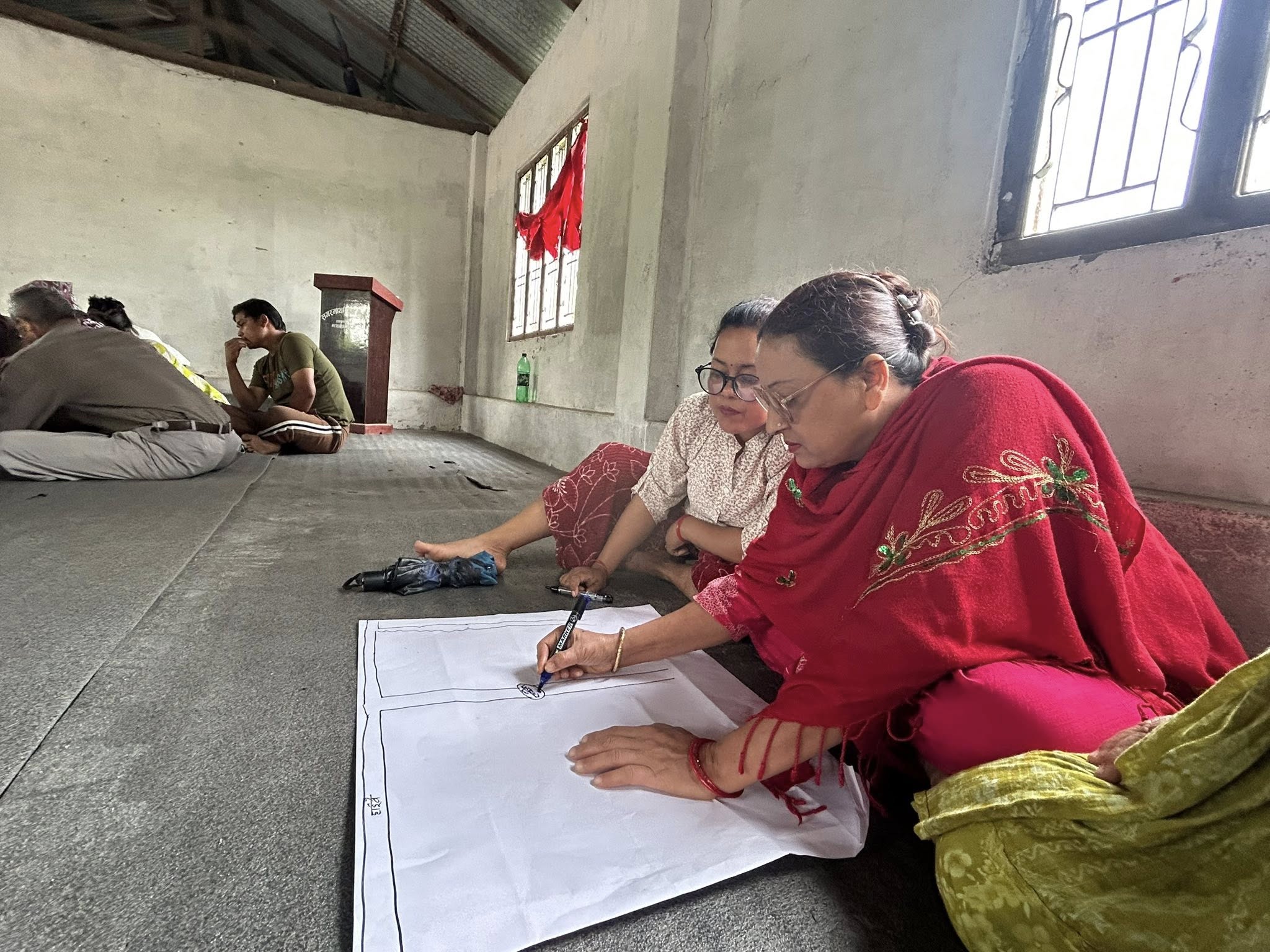
Community members have actively engaged in social and risk mapping exercises, which have now been successfully completed, laying a strong foundation for targeted interventions. Upcoming activities include restoring 1.5 km² of riverbanks with 3,000 native trees through bio-engineering techniques to reduce flood risks, installing 1 km of solar fencing and buffer crops using Raute models to protect livelihoods, and providing climate-smart agriculture and eco-tourism training to over 100 locals, including women and youth, to enhance food security and diversify incomes. In addition, a 50-member disaster risk reduction platform will be formed to document over 10 traditional practices, strengthening governance, knowledge-sharing, and women’s leadership. These integrated initiatives aim to build resilient ecosystems, protect livelihoods, and enhance local governance, making Baraha Kshetra a model for community-led disaster risk reduction and sustainable development.
Notice: Test mode is enabled. While in test mode no live donations are processed.
Leave A Comment